How Encryption Protects Your Privacy in the Age of Surveillance

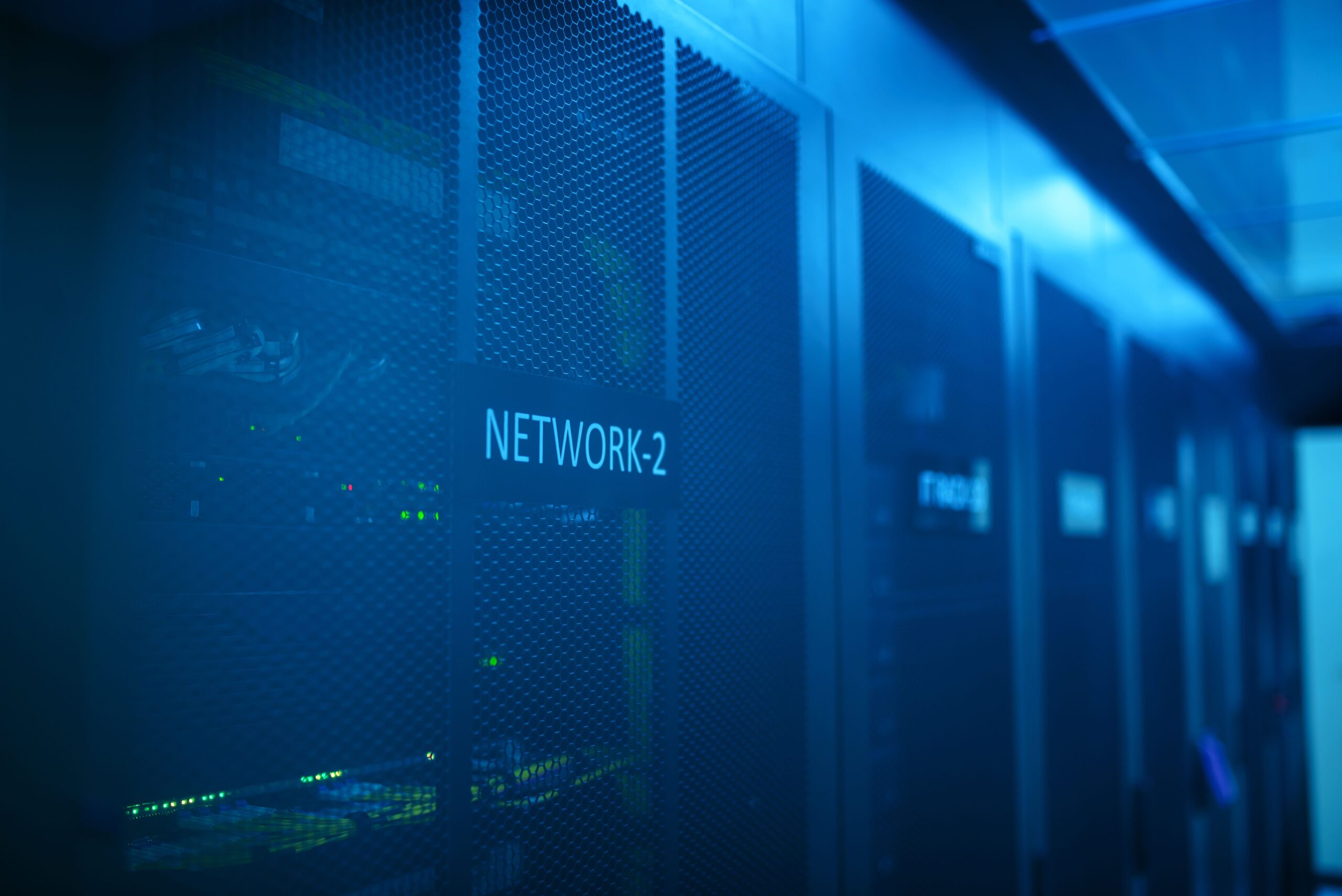
In an era where governments, corporations, and cybercriminals vie for access to your personal data, encryption stands as the last bastion of digital privacy. From the texts you send to the online purchases you make, encryption transforms readable information into indecipherable code, ensuring that only intended recipients can access it. Understanding how this technology works—and why it is under relentless attack—is essential for anyone navigating the modern internet.
The Core Mechanics: How Encryption Actually Works
At its simplest, encryption is a mathematical process that scrambles data using an algorithm and a key. There are two primary types: symmetric encryption, where the same key encrypts and decrypts data, and asymmetric encryption (public-key cryptography), which uses a public key for encryption and a private key for decryption. The latter underpins the secure connections you see in your browser’s URL bar—the padlock icon and “HTTPS” that verify your connection to a website is shielded from eavesdroppers.
When you send a message on WhatsApp or Signal, end-to-end encryption (E2EE) ensures that the content is encrypted on your device and only decrypted on the recipient’s device. The service provider—whether Apple, Google, or Meta—literally cannot read your messages. This is a radical departure from older systems where a company held the decryption keys and could access user data on demand.
Encryption vs. Mass Surveillance: A Technical Arms Race
Government surveillance programs, such as those revealed by Edward Snowden in 2013, rely on intercepting unencrypted data in transit. The National Security Agency’s (NSA) bulk collection of phone metadata and internet communications was only possible because much of that data traveled unprotected. Widespread adoption of encryption has forced intelligence agencies to shift tactics.
Today, rather than breaking encryption mathematically—which is computationally infeasible for strong algorithms like AES-256 or RSA-4096—surveillance actors focus on weaker points: device endpoints, encrypted metadata, or legal coercion. The FBI’s 2016 standoff with Apple over unlocking the San Bernardino shooter’s iPhone highlighted how encryption forces investigators to seek direct access to hardware, not intercepted data. This tug-of-war defines modern privacy: encryption makes dragnet surveillance impractical, but targeted attacks against individuals remain possible.
Everyday Encryption You Use Without Thinking
Most people benefit from encryption daily without realizing it. Your smartphone’s storage is encrypted by default on iOS and Android, meaning a thief cannot access your data without your passcode. Wi-Fi networks use WPA3 encryption to prevent neighbors from snooping on your web traffic. Email services like ProtonMail and Tutanota offer zero-access encryption, where even the provider cannot read stored messages. Even the humble Secure Shell (SSH) protocol encrypts remote server logins, protecting system administrators from credential theft on unsecured networks.
The critical point is that encryption is not optional for basic safety—it is embedded into the infrastructure of the internet. Without it, your banking, healthcare records, private communications, and even your location data would be open to anyone with a packet sniffer.
The Dark Side: Why Some Want Encryption Weakened
Law enforcement and intelligence agencies argue that strong encryption creates “going dark” problems—criminal and terrorist use of encrypted channels cannot be surveilled. Proposals for “backdoors” or “lawful access” to encrypted data have been floated by governments in the UK, US, Australia, and India. However, security experts universally condemn such measures. A backdoor for “good guys” is a vulnerability for everyone; it weakens the encryption for all users and creates a single point of failure that adversaries can exploit.
In 2020, the FBI’s Operation Trojan Shield demonstrated that law enforcement can successfully work around encryption by creating and controlling encrypted apps used by criminals—rather than breaking the encryption itself. This approach, while controversial, shows that compelling companies to weaken security is unnecessary when investigators can penetrate user trust through other means.
Regulatory Trends and Legal Threats
The European Union’s ePrivacy Directive and the General Data Protection Regulation (GDPR) mandate encryption for personal data storage and transmission. In contrast, the UK’s Online Safety Bill initially sought to require platforms to break E2EE to scan for child sexual abuse material, though it later softened language under fierce opposition from tech companies and privacy advocates. India’s IT Rules require messaging apps to “trace” message origins, which is technically impossible with true E2EE. These legal challenges threaten the very architecture of private communication.
The United States lacks a comprehensive federal privacy law, leaving companies to self-regulate under sectoral laws like HIPAA for health data and GLBA for financial data. The absence of federal encryption mandates means that some services—particularly free email providers and cloud storage—may not encrypt data at rest, leaving it vulnerable to subpoena or breach.
How to Maximize Your Encryption Footprint
To protect yourself against surveillance, you must be deliberate. Signal and WhatsApp offer the gold standard for messaging with audited, open-source E2EE. For email, ProtonMail or Tutanota encrypt message bodies end-to-end (subject lines remain unencrypted for server routing). Use a VPN (Virtual Private Network) to encrypt all traffic to your ISP, but understand that the VPN provider can see all your traffic—choose one with a verified no-logs policy. For file storage, use Cryptomator to encrypt files before uploading to Dropbox or Google Drive.
Hardware encryption is equally critical. Enable full-disk encryption on your laptop (BitLocker for Windows, FileVault for macOS). Use a password manager like Bitwarden or 1Password to generate and store complex, unique passwords for every site—this prevents credential theft from cascading across services. For sensitive web browsing, Tor Browser encrypts traffic in multiple layers and routes it through volunteer relays, concealing your IP address from destination servers and your ISP.
The Quantum Threat on the Horizon
Current encryption algorithms rely on mathematical problems that are exceedingly difficult for classical computers to solve—factoring large prime numbers, for example. Quantum computers, once sufficiently advanced, could break RSA and elliptic-curve cryptography (ECC) algorithms using Shor’s algorithm. This has prompted the National Institute of Standards and Technology (NIST) to develop post-quantum cryptography (PQC) standards. In 2024, NIST finalized four quantum-resistant algorithms, and companies like Apple and Cloudflare have begun testing PQC implementations. The transition will take years, but it is a reminder that encryption is not a static solution—it must evolve to meet technological threats.
The Human Element: Trust, Authentication, and Side Channels
Encryption is mathematically robust, but it cannot protect against human error. Phishing attacks trick users into revealing passwords or installing malware that captures data before encryption occurs. Social engineering remains the most effective surveillance tool—no algorithm can block a user from willingly logging into a fake website. Additionally, metadata (who you communicate with, when, and how often) is rarely encrypted. The Signal protocol encrypts metadata to some extent, but most messaging services still expose communication patterns to network observers.
Side-channel attacks, which exploit physical characteristics like power consumption, timing, or electromagnetic emissions from a device, can bypass encryption entirely. These attacks require close physical proximity and sophisticated equipment, making them relevant primarily for targeted espionage rather than mass surveillance. For everyday users, the greatest risk remains weak passwords, outdated software, and failure to enable available encryption features.
Encryption as a Public Good
The proliferation of free, open-source encryption libraries—the same code used by major corporations and journalists alike—democratizes privacy. Anyone can verify the code behind OpenSSL, Signal Protocol, or Let’s Encrypt certificates. This transparency is the foundation of trust; unlike proprietary systems, open encryption can be audited by independent experts to confirm no hidden backdoors exist. The Electronic Frontier Foundation (EFF) and other advocacy groups have made HTTPS and strong encryption the default through campaigns like “Encrypt the Web.”
In the age of surveillance, encryption does not promise absolute privacy—no technology can. But it forces an adversary to invest resources, time, and legal authority to access your data. For individuals not targeted by nation-states, encryption effectively renders your digital life invisible to mass surveillance systems. For journalists, activists, and whistleblowers, it can be a matter of physical safety. The future of privacy hinges on maintaining strong, backdoor-free encryption while simultaneously addressing the human factors that compromise it.