Robotic Process Automation (RPA) vs. Physical Robots: Key Differences

Robotic Process Automation vs. Physical Robots: Key Differences in a Digitizing World
In the lexicon of modern automation, the term “robot” evokes two distinct images. One is a mechanical arm welding a car chassis on a factory floor, a tangible entity of steel and servos. The other is a software agent silently processing invoices or migrating data between enterprise systems, an intangible force of logic and code. While both are categorized under the umbrella of automation, Robotic Process Automation (RPA) and Physical Robots (Industrial or Service Robots) are fundamentally different technologies with divergent architectures, applications, and operational principles. Understanding these differences is critical for businesses navigating the Fourth Industrial Revolution.
1. The Core Nature: Software vs. Hardware
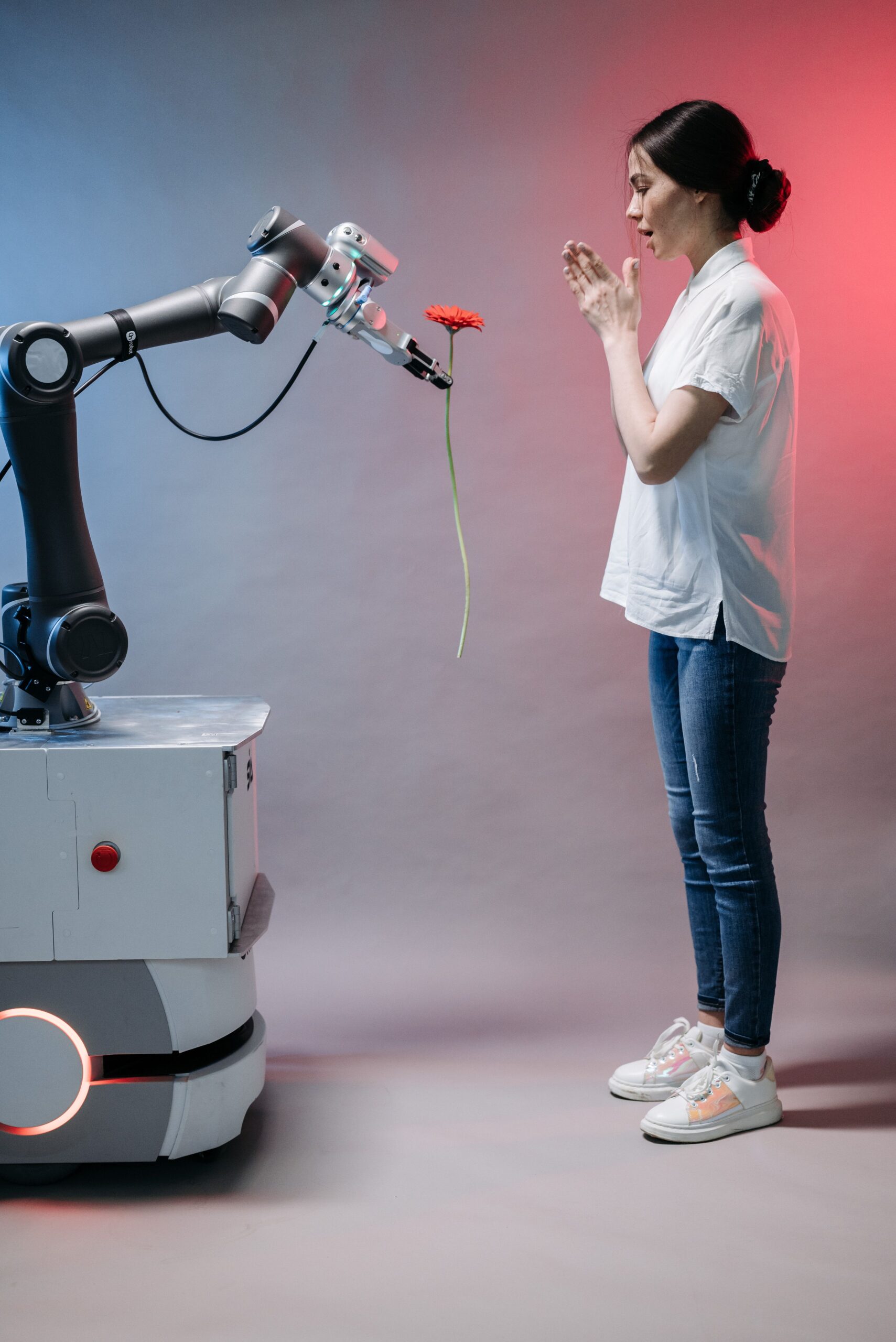
The most fundamental distinction lies in their physical form. Physical robots are electro-mechanical machines that interact with the physical world. They possess degrees of freedom, actuators (motors), sensors (vision, force, proximity), and end-effectors (grippers, welders). They obey the laws of physics—gravity, friction, inertia, and material fatigue. An industrial robotic arm performing pick-and-place tasks must be calibrated for mass, speed, and torque to avoid destroying its payload or itself.
RPA, conversely, is a software robot. It exists as a program installed on a virtual machine or a desktop computer. It has no physical form. Its “sensors” are the User Interface (UI) elements of software applications—buttons, text boxes, database fields. Its “actuators” are scripted commands to click, type, extract, and compute. An RPA bot cannot lift a box, but it can open an email, download the attached PDF, scrape the data from a legacy CRM, and paste it into an Excel spreadsheet. RPA operates on the layer of data and digital logic, making it inherently safer, cheaper to deploy, and infinitely scalable within the bounds of digital infrastructure.
2. Interaction with the Environment: Physical vs. Digital
Physical robots are designed to manipulate matter. A collaborative robot (cobot) in a warehouse picks a product from a bin; a surgical robot in an operating room sutures tissue; an autonomous mobile robot (AMR) navigates hospital hallways to deliver medication. Their environment is non-deterministic due to variations in lighting, object orientation, and human interference. They rely on complex computer vision and path-planning algorithms to handle uncertainty. Failure is often catastrophic—a dropped engine block or a collision with a human worker carries significant cost and safety risk.
RPA bots operate exclusively within a digital environment. Their world is deterministic and rule-based. For example, an RPA bot handling insurance claims processes structured data from defined fields in a claims management system. It does not need to “see” the paper; it reads optical character recognition (OCR) output or API calls. RPA excels at repetitive, high-volume tasks with structured or semi-structured data. It struggles with unstructured environments (e.g., extracting data from a handwritten note on a scanned document without sophisticated AI). Failure in RPA typically results in data corruption, missed deadlines, or process bottlenecks—costly, but rarely physically dangerous.
3. Implementation Complexity and Cost
Deploying physical robots requires substantial capital expenditure. A single industrial robot can cost $50,000 to $200,000, with integration costs (safety guarding, programming, sensors, maintenance) often tripling that amount. Implementation timelines span months, involving mechanical engineering, electrical wiring, safety compliance (ISO 10218/TS 15066), and rigorous testing. Physical robots demand dedicated floor space, specialized power supplies, and ongoing maintenance by skilled technicians. Modifications to the robot’s task often require hardware changes or reprogramming, leading to downtime.
RPA offers a radically different cost profile. A single RPA license (per bot) ranges from $5,000 to $15,000 annually, with one-time implementation fees often lower than physical automation. A bot can be developed in weeks, not months. RPA tools like UiPath, Automation Anywhere, or Blue Prism provide drag-and-drop interfaces, allowing business analysts with no coding background to build simple automations. Scaling RPA is as simple as deploying additional virtual machines. No physical space, zero on-site maintenance, and minimal downtime during updates. The primary cost driver becomes governance—managing the bot “zoo”—rather than hardware procurement.
4. Core Capabilities: Repetition vs. Cognition
Physical robots have traditionally excelled at kinematic intelligence—the ability to perform precise, repeatable, and high-speed movements. A modern industrial robot can achieve positional accuracy of ±0.02 mm, performing the same welding path thousands of times without deviation. However, they lack cognitive autonomy. They follow pre-programmed paths and require sensors to adapt to changes. A robot tasked with assembling a smartphone must be shown every variant; it cannot “figure out” a new screw location on its own.
RPA bots are masters of digital cognition—extracting, transforming, and loading data. They can log into systems using credentials, read emails, interpret business rules (if-then-else logic), and trigger workflows across disparate software platforms. They can copy data from a PDF into an ERP system, check for discrepancies, and send an alert. Modern RPA layers in Artificial Intelligence (AI) capabilities—Natural Language Processing (NLP) for interpreting customer emails, computer vision for reading PDFs, and machine learning for predicting invoice approval patterns. This cognitive layer is where RPA outpaces physical robots, as the latter’s AI integration (e.g., object detection for grasping) is far more complex due to physical constraints.
5. Human Interaction and Safety
Physical robots, particularly older industrial models, operate in isolated cages to prevent human contact. Speed and force can cause serious injury. Even modern collaborative robots (cobots) with force-sensing and speed-limiting capabilities require rigorous risk assessments. Human-robot interaction is physical, potentially hazardous, and governed by strict international standards (ISO/TS 15066). Maintenance staff undergo specialized training.
RPA bots are invisible to humans. They run silently in the background of a computer system. They do not pose physical safety risks. However, they affect workflow safety. A poorly designed RPA bot can lock user accounts, send corrupted data to critical systems, or overwrite legitimate entries. Governance is paramount—logging every action, implementing exception handling, and maintaining clear human oversight. The primary risk is not physical harm but operational chaos and data breach.
6. Scalability and Flexibility
Scalability in physical robotics is hardware-bound. Adding a second robot costs almost as much as the first—duplication of mechanics, power, safety systems, and floor space. Re-tooling a production line for a new product may require months of hardware redesign and downtime. Flexibility is achieved through end-of-arm tooling changes, but this is slow and costly.
RPA scales almost infinitely through cloud infrastructure. A business can spin up 50 bots overnight to handle a seasonal spike in customer onboarding, then reduce to 10 bots the next week. Flexibility in RPA comes from its script-based nature. Changing a business rule—e.g., adjusting the discount threshold for an invoice—requires updating a software script, not retooling machinery. This agility is RPA’s strongest competitive advantage, allowing organizations to adapt to market changes at the speed of software development.
7. Integration Complexity
Physical robots integrate with the physical world via Programmable Logic Controllers (PLCs), sensors, servo drives, and safety systems. They communicate through industrial protocols (EtherCAT, PROFINET, OPC UA). Integration is deeply technical, requiring specialized engineers and often custom wiring. A single connection failure can halt production.
RPA integrates with software systems through APIs, screen scraping, or recorded macros. If a target application offers an API, integration is clean and fast. If not, RPA can emulate a user—typing into a legacy green-screen terminal—making it the “duct tape” of enterprise IT. This low-level integration is powerful but fragile; UI updates or system upgrades can break a bot’s operation, requiring maintenance. Physical robots are less susceptible to this software volatility but are far harder to reconfigure.
8. Industry Applications: Where Each Dominates
Physical robots are dominant in manufacturing, logistics, and healthcare. Welding, painting, assembly, palletizing, warehouse picking, and surgical assistance are their strongholds. They handle heavy payloads, high-speed motion, and extreme environments (e.g., cleanrooms, foundries). The automotive and electronics sectors are their largest customers.
RPA thrives in finance, insurance, healthcare administration, banking, telecommunications, and government. Back-office processes—invoice processing, payroll, accounts reconciliation, loan processing, claims adjudication, data migration, report generation—are its natural habitat. RPA is the tool of choice for digitizing white-collar workflows, reducing human error in data entry, and freeing knowledge workers for higher-value tasks.
9. The Convergence: Hyperautomation and Cyber-Physical Systems
Increasingly, the line blurs. Hyperautomation integrates RPA with AI, process mining, and low-code platforms to automate end-to-end business processes. Meanwhile, Industry 4.0 and Internet of Things (IoT) connect physical robots to digital twins, allowing RPA to trigger physical actions. For example, an RPA bot detects an inventory shortage in the ERP, sends a command to an AMR to retrieve a pallet, and updates the logistics dashboard—all without human intervention. In these hybrid scenarios, RPA acts as the “brain” orchestrating digital processes, while physical robots serve as the “muscle” executing physical tasks.