What Is 5G Technology and How Does It Work

What Is 5G Technology and How Does It Work
The fifth generation of cellular network technology, known as 5G, represents a fundamental leap in wireless communication. Unlike its predecessors, which primarily focused on connecting people via smartphones, 5G is designed to connect virtually everything, from industrial robots to autonomous vehicles and smart city infrastructure. Understanding how 5G works requires dissecting its core architectural innovations: the use of higher frequency radio waves, advanced antenna systems, a redesigned core network, and sophisticated data encoding techniques.
The Radio Frequency Spectrum: The Foundation of Speed
All wireless communication relies on radio waves, which are measured in hertz (Hz). Previous generations (3G and 4G LTE) primarily utilized frequencies below 6 gigahertz (GHz). 5G expands this dramatically by operating across three distinct spectrum bands.
- Low-Band Spectrum (Sub-1 GHz): This provides broad coverage and excellent penetration through buildings and obstacles, similar to 4G. It is the foundation for wide-area 5G coverage in rural and suburban areas, but speeds are only marginally faster than 4G LTE.
- Mid-Band Spectrum (1 GHz – 6 GHz): Often called the “sweet spot,” this offers a balanced mix of coverage and capacity. It provides significantly faster speeds (100-900 Mbps) and reasonable range, making it ideal for urban and suburban deployments.
- High-Band Spectrum (mmWave – 24 GHz to 100 GHz): This is the true speed demon. Millimeter wave (mmWave) technology uses extremely high frequencies to deliver multi-gigabit speeds (1-10 Gbps) and ultra-low latency. However, mmWave signals are easily blocked by walls, trees, and even rain, requiring dense networks of small cell sites.
The key engineering challenge is that higher frequencies carry more data but have shorter range and poorer penetration. 5G overcomes this through beamforming and massive MIMO.
Beamforming and Massive MIMO: Precision and Density
Traditional cell towers broadcast signals in all directions, wasting energy and creating interference. 5G base stations use two transformative technologies.
- Massive MIMO (Multiple Input Multiple Output): A standard 4G tower might have 8 to 16 antennas. A 5G massive MIMO array can contain 64, 128, or even 256 antenna elements. This creates multiple simultaneous data streams to many users, dramatically increasing network capacity and efficiency. It is the primary reason 5G can support thousands of connected devices per square kilometer.
- Beamforming: This technology works hand-in-hand with massive MIMO. Instead of broadcasting a single, omnidirectional signal, the base station uses advanced algorithms to focus radio waves into narrow, targeted beams directed precisely at each user device’s location. The beam dynamically tracks the user as they move. This drastically reduces interference, improves signal strength, and enables the mmWave signals to travel further and more reliably.
The New Core Network: Network Slicing and Edge Computing
5G’s radio technology is only half the story. The core network—the backbone that routes data and manages connections—has been completely redesigned from a physical, hardware-based architecture to a virtualized, software-defined one.
- Network Function Virtualization (NFV): Instead of using dedicated, proprietary hardware, network functions like routing and authentication run as software on standard commercial servers. This makes the network infinitely more flexible, cheaper to operate, and simpler to upgrade.
- Network Slicing: This is perhaps 5G’s most revolutionary feature. It allows operators to create multiple virtual networks (slices) on top of a single physical infrastructure. Each slice can be customized for a specific application’s needs. For example:
- A smart factory gets a slice with ultra-reliable low-latency communication (URLLC) for robotic control.
- A streaming service gets a slice with high bandwidth (eMBB) for 8K video.
- A network of IoT sensors gets a slice optimized for massive machine-type communications (mMTC) with low power consumption.
- Edge Computing: 5G drastically reduces latency (the time delay before a transfer of data begins following an instruction) by moving computing power closer to the user. Instead of sending data to a centralized cloud server hundreds of miles away, processing happens at “edge” servers located physically near the 5G base station. This sub-10-millisecond latency is critical for applications like autonomous driving and remote surgery.
How Your 5G Phone Connects
When you enable 5G on a modern smartphone, the device scans for available 5G frequencies. The phone communicates with the nearest base station using Orthogonal Frequency Division Multiplexing (OFDM), a digital modulation scheme that splits a data stream onto many different carrier frequencies, making the signal highly resistant to interference. The phone and base station negotiate which spectrum band to use, often employing a feature called NSA (Non-Standalone) mode, where the 5G radio connects to an existing 4G core network for control signals while transmitting data over the 5G channel. Future SA (Standalone) mode will operate purely on a 5G core, unlocking the full potential of network slicing and ultra-low latency.
The Three Pillars of 5G Capabilities
The International Telecommunication Union (ITU) defines 5G’s performance targets across three primary use case categories:
- Enhanced Mobile Broadband (eMBB): This is what consumers see: faster downloads, smoother 4K/8K video streaming, and high-speed connectivity in crowded venues like stadiums. It leverages mmWave and mid-band spectrum.
- Ultra-Reliable Low-Latency Communications (URLLC): This targets critical applications demanding near-instantaneous response. Examples include industrial automation, autonomous vehicle control, and remote medical procedures. It requires edge computing and network slicing.
- Massive Machine-Type Communications (mMTC): This supports the Internet of Things (IoT) on a massive scale, connecting billions of low-power, low-data-rate sensors for smart cities, agriculture, logistics, and environmental monitoring.
The Physical Infrastructure Behind 5G
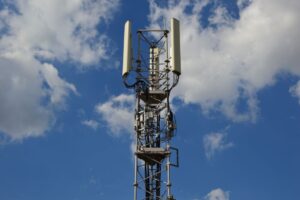
Delivering 5G requires a densification of network infrastructure. The traditional macro cell towers are supplemented by thousands of small cells—low-power base stations attached to streetlights, buildings, and utility poles, especially in cities. Fiber optic cables run to these small cells to handle the immense backhaul data traffic. Additionally, some 5G deployments use Fixed Wireless Access (FWA) , where a home or office receives its broadband internet via a rooftop 5G receiver, bypassing the need for physical cables as the last mile.
5G Advanced and the Path to 6G
The 5G standard is not static. The 3rd Generation Partnership Project (3GPP) continues to evolve the standard. 5G Advanced is the next evolutionary step (3GPP Release 18 and beyond), bringing AI-driven network optimization, improved positioning accuracy, and enhanced support for extended reality (XR) applications. This iterative improvement ensures that the foundational technologies of beamforming, massive MIMO, network slicing, and edge computing will continue to mature, unlocking new synergies between wireless connectivity and artificial intelligence.