The Evolution of the Internet: From ARPANET to the Metaverse

The internet’s transformation from a niche military tool into a global, immersive digital ecosystem is one of the most profound technological shifts in human history. This journey, spanning over five decades, is marked by distinct eras—each defined by architectural breakthroughs, cultural upheavals, and economic reconfigurations. Understanding this evolution requires examining the foundational protocols, the commercialization that democratized access, the social web’s rise, and the current push toward persistent, three-dimensional virtual spaces.
The Foundational Decade: ARPANET and Packet Switching (1960s–1970s)
The internet’s genealogy begins in the Cold War era, not with a single invention but with a conceptual breakthrough: packet switching. In 1961, Leonard Kleinrock published the first paper on packet-switching theory; Paul Baran at RAND and Donald Davies at the UK’s National Physical Laboratory independently developed similar ideas. The goal was to build a communication network that could survive a nuclear strike by routing data in small, independent “packets” rather than via dedicated circuit-switched lines.
The Advanced Research Projects Agency (ARPA, now DARPA) funded the ARPANET project, which went live in 1969, connecting four university nodes: UCLA, Stanford Research Institute, UC Santa Barbara, and the University of Utah. The first message ever sent was “LO”; the system crashed after transmitting the first two letters of “LOGIN.” This humble start established the core principle of distributed architecture—no single point of failure. By 1973, Robert Kahn and Vint Cerf had developed the Transmission Control Protocol and Internet Protocol (TCP/IP), the universal language that allowed disparate networks to interconnect. The ARPANET officially adopted TCP/IP on January 1, 1983, a date often considered the birth of the modern internet.
The Rise of the World Wide Web (1989–1995)
While the internet provided the plumbing, its content was largely text-based, requiring users to navigate via complex command-line interfaces like Gopher, FTP, and Usenet. The turning point came in 1989 at CERN, where Tim Berners-Lee proposed a “hypertext” system to manage particle physics data. He developed three key technologies: HTML (HyperText Markup Language) for structure, HTTP (HyperText Transfer Protocol) for data exchange, and URLs (Uniform Resource Locators) for addressing resources. In 1991, he released the first web browser, WorldWideWeb (later renamed Nexus), and, crucially, made the underlying code freely available.
The catalyst for mass adoption was the Mosaic browser, released in 1993 by Marc Andreessen and Eric Bina at the University of Illinois. Mosaic introduced inline images, simplified navigation, and a graphical interface. Andreessen later co-founded Netscape, which released its Navigator browser in 1994. This triggered the browser wars—a competition between Netscape and Microsoft’s Internet Explorer—which accelerated web development, introduced JavaScript, and fostered dynamic content via plugins like Flash. The commercialization of the internet followed rapidly. Amazon was founded in 1994, eBay in 1995, and Google in 1998. The dot-com bubble (1995–2000) saw astronomical valuations for companies with little revenue, driven by speculation and speculative IPOs, culminating in the Nasdaq crash of 2000.
Web 2.0 and the Social Internet (2000–2010)
The crash was a brutal reset, but it cleared the ground for a second, more robust phase: Web 2.0. Coined by Tim O’Reilly in 2004, Web 2.0 described a shift from static, read-only web pages to dynamic, user-generated, and participatory platforms. The key change was the internet’s transformation into a two-way medium. Blogs, wikis, and social networks allowed anyone to create and share content.
Technological enablers included AJAX (Asynchronous JavaScript and XML), which allowed web pages to update dynamically without a full reload, and the proliferation of high-speed broadband. YouTube (2005), Facebook (2004, initially for Harvard students, then public in 2006), Twitter (2006), and Wikipedia (2001) exemplified this era. The internet became a social graph—a digital reflection of real-world relationships, interests, and influence. APIs (Application Programming Interfaces) from platforms like Google Maps and Facebook allowed developers to embed services and data, spawning a massive ecosystem of third-party applications.
Mobile internet was the final piece of this era. The iPhone’s 2007 launch, followed by the App Store in 2008, moved the internet from the desktop to the pocket. Touch interfaces, GPS, and always-on connectivity created a new paradigm: the internet as an ambient utility, accessed on demand. Smartphones drove global internet penetration from 15% in 2005 to over 50% by 2020.
The Mobile-Cloud Convergence and Algorithmic Curation (2010–2020)
The 2010s were defined by verticalization and optimization. The web, once a decentralized network of open protocols, increasingly consolidated into walled gardens controlled by a few tech giants. Google, Apple, Facebook, Amazon, and Microsoft (the “Big Five”) built integrated ecosystems where users rarely left their native apps. Cloud computing (Amazon Web Services launched in 2006, Google Cloud in 2008, Microsoft Azure in 2010) shifted processing from local devices to remote data centers, enabling complex services like streaming video (Netflix), real-time collaboration (Google Docs), and personalized recommendations (Spotify, YouTube).
Algorithms became the primary gatekeepers. Rather than browsing directories or using search engines, users were fed curated feeds driven by machine learning, reinforcing engagement metrics. This era birthed the attention economy, where user time and data were the primary commodities. Concerns over privacy, filter bubbles, and misinformation grew, leading to regulatory actions like the EU’s General Data Protection Regulation (GDPR) in 2018.
The Decentralization Push: Blockchain and Web3 (2017–Present)
Simmering dissatisfaction with platform monopolies and data centralization catalyzed the Web3 movement. Built on blockchain technology—public, immutable, peer-to-peer ledgers—Web3 aims to return ownership of data and digital assets to users. The concept, popularized by Ethereum’s smart contracts (2015), allows for decentralized applications (dApps), self-sovereign identity, and token-based economies. Non-fungible tokens (NFTs), which exploded in popularity in 2021, demonstrated the ability to prove ownership of unique digital items (art, music, virtual land) without a central authority.
Decentralized Autonomous Organizations (DAOs) and the rise of decentralized finance (DeFi) challenged traditional financial and governance structures. However, Web3 faces significant hurdles: scalability (high transaction costs on Ethereum), regulatory uncertainty, and a user experience that remains far less intuitive than Web 2.0. Critics argue that the hype has outpaced practical utility, with many projects resembling speculative financial instruments more than actual improvements to how people use the internet.
The Immersive Frontier: The Metaverse (2020–Future)
The metaverse represents the current and most ambitious vision for the internet’s evolution: a persistent, shared, 3D virtual space where physical and digital realities converge. The term was coined by Neal Stephenson in his 1992 novel Snow Crash, but it became a mainstream tech goal in 2021 when Facebook rebranded as Meta.
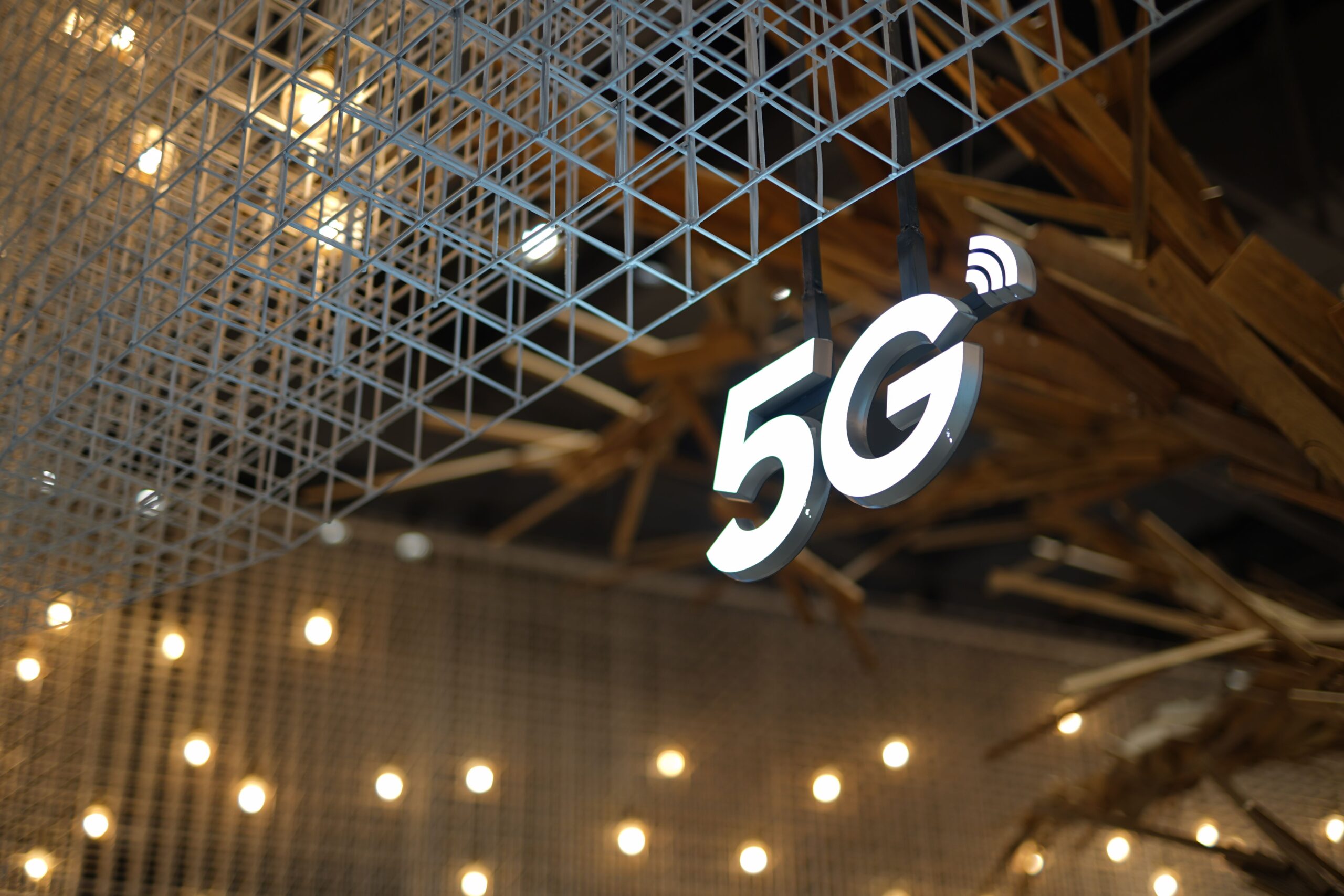
The metaverse is not a single platform but a confluence of enabling technologies. Virtual reality (VR) headsets like Meta Quest and Apple Vision Pro provide immersive presence; augmented reality (AR) overlays digital objects onto the physical world. Spatial computing enables gesture and eye tracking, while digital twins (real-time 3D models of physical objects or cities) allow simulation and remote collaboration. High-speed, low-latency networks, including 5G and fiber, are prerequisites for rendering complex 3D environments without lag.
Key sectors driving metaverse development include gaming (Roblox, Fortnite, Decentraland), enterprise collaboration (Microsoft Mesh, NVIDIA Omniverse), and e-commerce (virtual storefronts, try-on experiences). The economic model relies on digital ownership—players can own, trade, and sell virtual goods across interoperable worlds, a concept deeply tied to blockchain-based NFT standards. However, the metaverse is still nascent; hardware remains bulky, interoperability between platforms is limited, and the “killer app” that attracts billions of users has yet to emerge.
Ongoing Shifts: AI, Edge Computing, and the Semantic Web
The evolution is not linear; multiple currents converge simultaneously. Artificial intelligence, particularly large language models (like GPT-4) and generative AI, is fundamentally changing how users interact with digital information. Rather than navigating web pages, users increasingly query AI agents for answers, summaries, and content creation. This shifts the internet from a search-and-retrieve model to a conversational, generative model.
Edge computing moves data processing closer to the user—on phones, routers, or edge servers—reducing latency for real-time applications like autonomous vehicles, industrial IoT, and AR glasses. This complements 5G and 6G networks by enabling computation at the “edge” of the network rather than in centralized data centers.
The Semantic Web, an initiative pioneered by Tim Berners-Lee, aims to structure web data so machines can understand and reason with it. While its initial vision of linked data standards (RDF, OWL) never achieved mainstream adoption, modern AI systems, with their ability to parse natural language, are rediscovering the value of structured metadata for knowledge graphs and recommendation systems.
Infrastructure and Security Challenges
Each evolutionary phase has introduced new vulnerabilities. The early internet was designed for trust and openness, not commercial or adversarial contexts. Today, cybersecurity is a core pillar. Distributed denial-of-service (DDoS) attacks, ransomware, and data breaches cost the global economy trillions annually. The shift to the metaverse amplifies risks: deepfake-generated identities, virtual asset theft, biometric data leaks, and psychological manipulation in immersive environments.
Regulation is playing catch-up. The EU’s Digital Services Act and Digital Markets Act impose stricter rules on platform liability and gatekeeper competition. The metaverse introduces questions about virtual property rights, cross-border jurisdiction in 3D spaces, and liability for user-generated harm within virtual worlds. The tension between open protocols (like the open web of the 1990s) and proprietary platforms (the Web 2.0 model, and likely early metaverse ecosystems) remains unresolved.
The Network Effect: A Continuous Transformation
From a four-node experiment to a global network connecting billions of devices, the internet’s evolution is a story of scaling, abstraction, and user empowerment followed by consolidation. The ARPANET era solved connectivity; Web 1.0 solved information access; Web 2.0 solved participation; the mobile-cloud era solved ubiquity; Web3 aims to solve ownership; the metaverse aims to solve presence.
Each stage did not replace the previous but layered upon it. TCP/IP still runs ARPANET’s core architecture. Email, a 1970s protocol, remains a daily tool. The metaverse, when fully realized, will not erase search engines or social feeds but incorporate them into a seamless, spatial, and semantically rich experience. The underlying drivers—faster networks, cheaper computing, better interfaces, and the human desire for connection, creation, and commerce—continue unbroken. The internet is no longer a tool we use; it is the evolving environment in which we live, work, and interact. The next decade will determine whether that environment remains open, secure, and equitable—or whether it becomes the ultimate walled garden.