Why Fiber Optic Networks Are Essential for Modern Smart Cities

The Digital Arteries: Why Fiber Optic Networks Are the Non-Negotiable Backbone of Modern Smart Cities
The vision of a “Smart City” conjures images of autonomous vehicles weaving through synchronized traffic, streetlights that dim based on pedestrian presence, and real-time environmental sensors measuring air quality. Yet, beneath this sleek surface lies a single, non-negotiable prerequisite: a ubiquitous, high-capacity, and low-latency fiber optic network. Wireless technologies like 5G and Wi-Fi 6 may be the visible tools, but fiber is the underground engine. Without fiber optics, a smart city is merely a collection of disconnected, high-cost experiments. For urban planners, municipal leaders, and technology investors, understanding why fiber is essential—not optional—for the urban future is critical.
1. The Raw Capacity for a Hyper-Connected Ecosystem
A smart city is defined by data. Every second, thousands of sensors (IoT devices) monitor water pressure, waste bin levels, energy grids, and structural integrity of bridges. A single high-definition security camera generates approximately 10-30 GB of data daily. Multiply that by thousands of cameras, and the network must handle petabytes of information. Copper cables (DSL or coaxial) physically cannot support this scale. Their maximum bandwidth is limited by electromagnetic interference and signal degradation over distance.
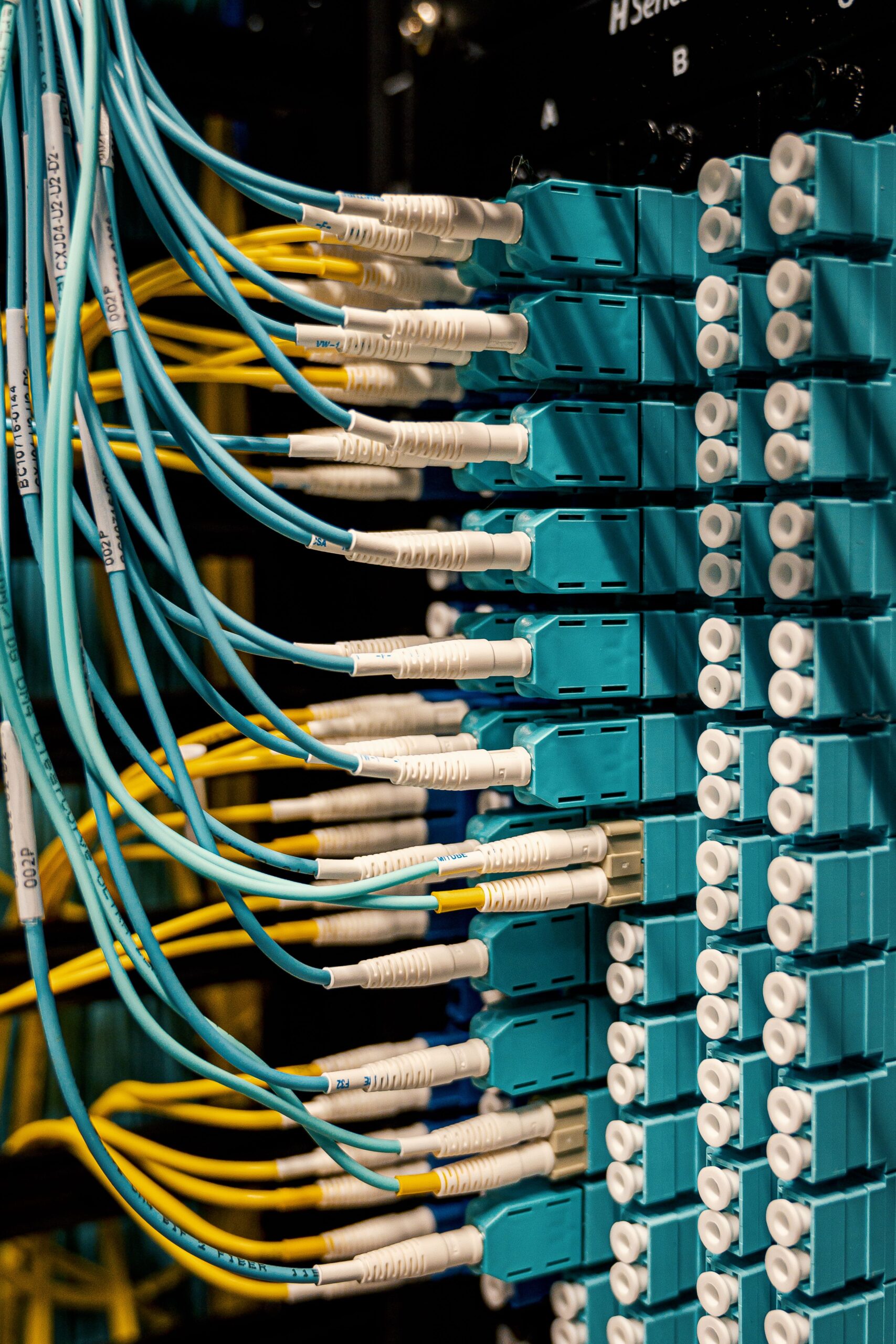
Fiber optic cables, transmitting light through glass strands, offer virtually unlimited bandwidth. Current technology supports speeds exceeding 100 Gbps to individual endpoints, with the theoretical capacity of a single fiber strand reaching into the tens of terabits per second. This “future-proofing” is vital. As cities deploy 4K/8K surveillance, LiDAR mapping for autonomous zones, and massive IoT arrays, fiber ensures the network does not become a bottleneck. A smart city built on copper is obsolete before it is even fully deployed.
2. Latency: The Critical Differentiator for Real-Time Decisions
The “smart” in Smart City relies on immediate response. Consider an autonomous emergency vehicle approaching an intersection. The vehicle’s systems must communicate with the traffic management system to turn lights green, redirect surrounding vehicles, and open barriers. This data loop must happen in milliseconds. Latency—the delay before a transfer of data begins moving—is the enemy here.
Copper networks introduce latency through electrical resistance and processing delays. 5G wireless base stations, while low-latency for the last leg, are entirely dependent on a high-speed fiber backhaul. A 5G tower connected to a copper backbone immediately introduces inherent delay. Fiber optic networks, however, transmit at 99.7% the speed of light, with median latency under 1 millisecond across a metro area. This speed is non-negotiable for:
- Grid Management: Instantly balancing load to prevent blackouts.
- Public Safety: Linking gunshot detection systems to police dispatch without a second’s lag.
- Telemedicine: Enabling remote robotic surgery in urban hospitals where even a 20ms delay is risky.
3. Energy Efficiency and Sustainability for Green Cities
The modern smart city must also be a sustainable city. Copper networks are energy hogs. They require power-hungry repeaters every few kilometers to boost weakened electrical signals, and the resistance in copper generates significant heat. Fiber optic cables, conversely, use photonic signals that require minimal power. A single fiber link can run for 60-100 kilometers without needing a regenerator, drastically cutting the energy footprint of the data transmission infrastructure.
This efficiency cascades. When a city deploys smart grids to optimize energy distribution, the network itself should not be a primary consumer of that energy. Furthermore, fiber is manufactured from silica (sand), a far more abundant material than copper. As copper mining depletes and becomes environmentally destructive, fiber represents a more sustainable, scalable material choice for a city’s long-term digital ecosystem.
4. EMI Immunity and Reliability for Life-Critical Systems
Smart cities are magnets for electromagnetic interference (EMI). Subway systems, high-voltage power lines, industrial machinery, and thousands of wireless transmitters create a noisy electronic environment. Copper cabling acts as an antenna, susceptible to this interference, which can corrupt data, degrade signal quality, and cause connectivity dropouts. This is unacceptable for systems controlling traffic, emergency response, or water treatment.
Fiber optics are completely immune to electromagnetic interference. The light signal inside a glass core is unaffected by external electrical fields. This provides 100% signal integrity in the harshest urban environments. Fiber is also significantly more durable than copper, resistant to corrosion and temperature changes. This reliability is paramount for infrastructure that cannot afford downtime. A water main break is a nuisance; a network failure that prevents the smart water system from detecting the leak is a catastrophe.
5. Symmetric Speed: Enabling the “Prosumer” City
Most residential internet connections (copper-based) are asymmetric: they offer high download speeds but abysmally low upload speeds. This model is obsolete for a smart city. Smart city ecosystems require massive upstream capacity. Sensors upload data. Cameras upload feeds. Town halls stream high-definition public meetings. Remote workers in a dense urban core require high upload bandwidth for video conferencing and cloud computing.
Fiber optic networks provide symmetric data rates (e.g., 1 Gbps down / 1 Gbps up). This empowers citizens to become “prosumers”—producers of data—not just consumers. It allows small businesses to host local cloud servers, startups to run data-heavy applications, and educational institutions to facilitate immersive remote learning. A city that restricts upload speed strangles its own economic innovation and fails to leverage the full potential of its human capital.
6. The Backbone for 5G and Future Wireless Technologies
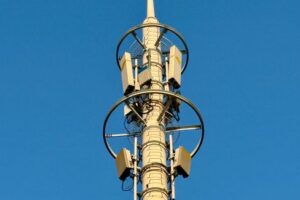
A pervasive misconception is that 5G (and future 6G) replaces the need for fiber. The truth is the opposite. Every 5G “small cell” node—the mini-towers you see on lamp posts—requires a dedicated fiber optic connection to the core network. Wireless is the “last 100 feet”; fiber is the essential “last mile” and “middle mile.” Without a dense fiber infrastructure, a 5G network will have limited capacity, high latency, and poor coverage.
As cities densify, the number of small cells will explode. Each one needs power and data. A copper connection to a 5G node would throttle the very speed that 5G promises. Therefore, a prerequisite for any intelligent transportation system, smart stadium, or augmented reality public wayfinding is the physical trenching of fiber to the locations where wireless radios will sit. The smart city’s wireless future is entirely tethered to a wired fiber present.
7. Transforming Urban Utilities and the Internet of Things (IoT)
The core value proposition of a smart city is operational efficiency. Fiber enables the convergence of traditionally siloed utilities onto a single, intelligent network.
- Smart Water: Fiber sensors can be embedded directly into pipes to detect pressure changes, leaks, and chemical composition in real-time, far more accurately than wireless sensors, which require battery replacement.
- Smart Waste: Fiber-connected bins signal when they are full, optimizing collection routes and reducing diesel consumption by sanitation trucks.
- Smart Lighting: LED streetlights connected via fiber can be dimmed remotely, and the same fiber path can carry data for Wi-Fi access points or environmental sensors.
This convergence reduces redundancy. Instead of separate copper lines for meters, alarms, and cameras, a single fiber strand serves all functions. This lowers total cost of ownership over the 25–30-year lifespan of the infrastructure, making the initial investment in trenching and laying fiber highly economically viable.
8. Boosting Economic Competitiveness and Digital Equity
In the 21st century, broadband access is a public utility akin to water and electricity. Cities with robust fiber infrastructure attract high-value businesses, tech talent, and international investment. Tech giants choose headquarters locations based on connectivity. Startups fail without it. Fiber networks increase property values; studies consistently show that homes connected to fiber sell for a premium of 3–5%.
Moreover, a smart city cannot be “smart” if it is only smart for the wealthy. Fiber’s high capacity allows for affordable, high-quality internet packages, helping to bridge the digital divide. A fiber-to-the-home (FTTH) network allows a low-income student to access the same latency-free educational resources as a student in a wealthy suburb. It allows a senior citizen to utilize telemedicine with the same reliability as a downtown hospital. The backbone of a just, equitable smart city is a fiber network that reaches every block, not just the central business district.
9. Security, Encryption, and Data Sovereignty
A smart city is a target-rich environment for cyberattacks. A copper network broadcasts a faint electromagnetic signal that can be tapped with relatively simple equipment (inductive coupling). Fiber does not radiate any signal, making physical tapping virtually impossible without physically cutting the cable and triggering an alarm. Furthermore, data transmitted via light is inherently more secure; it is significantly harder to intercept compared to radio waves (wireless) or electrical impulses (copper).
For a city managing sensitive data—citizen health records, traffic patterns for security, voting systems—this physical security layer is invaluable. Combined with advanced encryption at the fiber level, cities can ensure data sovereignty and protect critical infrastructure from state-sponsored or criminal actors looking to disrupt urban life.