The Role of 5G in Enabling Smart Cities


The Role of 5G in Enabling Smart Cities: The Nervous System of Urban Evolution
The concept of the smart city has long captivated urban planners, technologists, and citizens alike. For decades, the vision was clear: a hyper-efficient, data-driven metropolis where traffic flows seamlessly, energy consumption is optimized, public safety is proactive, and environmental impact is minimized. However, the connective tissue required to turn this vision into reality—the ability to transmit vast amounts of data with near-zero latency—remained out of reach. Fourth-generation (4G) Long-Term Evolution (LTE) networks provided a foundation, but they lacked the bandwidth, speed, and device density needed to support a truly interconnected urban ecosystem. The arrival of Fifth Generation (5G) wireless technology represents the definitive catalyst for smart city adoption. 5G is not merely a faster version of 4G; it is a fundamental paradigm shift. With its three core pillars—enhanced Mobile Broadband (eMBB), Ultra-Reliable Low-Latency Communications (URLLC), and massive Machine-Type Communications (mMTC)—5G provides the specific technical capabilities required to orchestrate the complex symphony of sensors, vehicles, infrastructure, and utilities that define a smart city.
The Digital Skeleton: Unprecedented Connectivity Density
The primary bottleneck for previous smart city initiatives was the inability to connect a massive number of sensors and devices simultaneously. A truly intelligent city might require tens of thousands of nodes per square kilometer—monitoring everything from parking spaces to air quality, manhole covers to waste bins. 4G networks typically support approximately 2,000 to 4,000 connected devices per square kilometer. 5G, through its mMTC capabilities, scales this capacity to over one million devices per square kilometer. This is not an incremental improvement; it is a three-order-of-magnitude leap. For smart cities, this density enables the deployment of a dense, granular sensor grid. Cities can now install low-power, low-cost sensors on streetlights, traffic signals, and building facades without fear of network congestion. This dense network forms the digital skeleton of the city, feeding a constant stream of real-time data into central analytics platforms. This permits city managers to monitor traffic flow at the granularity of individual vehicles, track pedestrian movement in public squares during events, and detect micro-climates forming within urban heat islands. Without the device density of 5G, such granularity is economically and technically unfeasible.
Real-Time Control: The Latency Revolution for Traffic and Safety
Smart city applications often require real-time or near-instantaneous response times. For every second of latency, a car traveling at 30 mph moves roughly 44 feet. In the context of autonomous vehicle (AV) coordination or collision avoidance systems, even a 50-millisecond delay inherent in 4G networks can be catastrophic. 5G’s URLLC feature delivers end-to-end latency of less than 1 millisecond (ms) over the air interface. This is the enabler for Vehicle-to-Everything (V2X) communication. In a 5G-enabled smart city, traffic lights communicate directly with approaching vehicles to adjust timing based on actual traffic density, eliminating the need for fixed timers. A connected ambulance can send a “green wave” request to a series of traffic signals, clearing the route ahead of time. More critically, 5G facilitates “cooperative perception,” where vehicles and roadside infrastructure share sensor data. A car that is blind to a pedestrian stepping out from behind a truck can receive that information from a 5G-connected traffic camera in microseconds, enabling an autonomous emergency brake application. This low-latency control extends to public infrastructure. Smart grids can re-route power in milliseconds after a fault, isolating damage and preventing cascading blackouts. These are not theoretical benefits; they are mission-critical functions that only become viable with 5G’s latency profile.
Bandwidth for the Urban Eye: High-Definition Surveillance and Digital Twins
The urban environment generates an immense volume of visual data. High-definition video feeds from thousands of security cameras, traffic monitoring systems, and environmental drones require massive upstream bandwidth. 4G networks typically support download speeds of 50-100 Mbps, with upload speeds significantly lower. 5G eMBB delivers peak download speeds of up to 20 Gbps and consistent real-world speeds of 100-900 Mbps, with substantially improved upload capabilities. This bandwidth revolution allows for the widespread deployment of 4K and 8K cameras that can perform real-time analytics at the edge. These high-resolution feeds enable sophisticated applications like intelligent traffic management, where algorithms can read license plates, detect erratic driving, and identify lost pedestrians in real-time, all without sending raw video to a centralized server. Furthermore, high-bandwidth 5G is the critical enabler of Digital Twins—virtual replicas of physical urban environments. Creating a dynamic, real-time 3D model of a city requires the continuous ingestion of data from millions of IoT sensors, LiDAR scans, and public CCTV. The sheer data volume demands 5G’s bandwidth. Planners can simulate the impact of a new building on traffic flow, test emergency evacuation routes during a simulated disaster, or run “what-if” scenarios for flooding based on real-time weather data, all within the digital twin before making changes to the physical world. This iterative, data-driven planning is a cornerstone of efficient urban management.
Energy Optimization and Environmental Sensing
Sustainability is a core tenet of smart city development. 5G networks, despite the energy consumption of their dense infrastructure, enable profound energy savings across the urban ecosystem. Smart street lighting, for example, has existed for years, but typically relies on motion sensors or timers. With 5G’s low latency and high density, streetlights can now be networked with pedestrian counters and weather data. A street can be illuminated to 100% power only when people are present, dimming to 10% at all other times, reducing energy consumption by up to 80%. Similarly, smart HVAC systems in large public buildings can adjust heating and cooling based on real-time occupancy data transmitted from 5G-connected wearables or building sensors. On a municipal scale, smart grid management via 5G allows for dynamic load balancing. During periods of peak demand, the city can manage charging stations to avoid grid overload, or tap into battery storage from parked electric vehicles (V2G, Vehicle-to-Grid). Environmental monitoring also reaches new sophistication. A dense grid of 5G-connected sensors can measure air quality at street level, differentiating between particulate matter from diesel buses versus passenger cars. This data can trigger dynamic traffic management, such as rerouting heavy trucks away from residential zones during high-pollution hours.
Overcoming the Challenges: Infrastructure and Security Realities
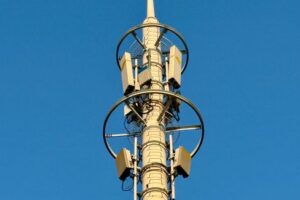
It is critical to acknowledge that 5G is not a magic wand; its deployment in smart cities presents significant hurdles. The most immediate challenge is infrastructure density. 5G’s high-frequency mmWave spectrum has poor penetration through buildings and foliage. This necessitates a massive deployment of small cells—miniature base stations attached to streetlights, bus stops, and utility poles—every 100-300 meters in dense urban areas. The cost of this densification is substantial, requiring public-private partnerships and significant capital investment from mobile operators and municipalities. Furthermore, 5G-enabled cities become more dependent on a single digital nervous system, introducing a massive security and privacy attack surface. A sophisticated attack on the 5G network could potentially disrupt traffic systems, disable emergency services, or compromise surveillance data. Therefore, robust network slicing (creating virtual, isolated network segments for critical services) and end-to-end encryption are not optional; they are fundamental requirements. Governments and operators must adhere to stringent cybersecurity frameworks, such as the NIST (National Institute of Standards and Technology) guidelines, to ensure resilience. Additionally, the energy consumption of the 5G radio access network itself is higher than 4G, potentially offsetting some sustainability gains if not powered by renewable energy sources. Strategic planning is required to power these small cells with solar or grid-stored renewable energy.
The Economic Flywheel and New Services
The technological capabilities of 5G create an economic flywheel. By enabling smart city applications, 5G attracts private investment and fosters new service industries. For example, predictive maintenance of infrastructure becomes viable. A bridge equipped with 5G-connected vibration sensors can transmit data continuously, allowing engineers to detect structural degradation months before a visual inspection. This saves taxpayer money and prevents catastrophic failures. Similarly, logistics and delivery companies can leverage 5G for drone-based last-mile delivery, requiring real-time communication with air traffic management systems to prevent collisions with buildings and other drones. The healthcare sector also benefits profoundly. A 5G smart city can support remote surgery or telemedicine services that require ultra-low latency, bringing specialist care to underserved urban areas. The data generated by these applications—traffic patterns, energy usage, foot traffic—becomes a valuable asset for urban planning, commercial real estate development, and retail strategy. This ecosystem creates a virtuous cycle: better connectivity enables better services, which drives adoption and data generation, which in turn funds further infrastructure upgrades and innovation. The economic impact of 5G smart cities is projected to reach trillions of dollars globally by the end of the decade, primarily driven by operational efficiencies and new revenue streams.
Edge Computing: The Symbiotic Partner
5G’s full potential in a smart city is realized only when paired with edge computing. Sending all data back to a central cloud data center defeats the purpose of low latency. Multi-access Edge Computing (MEC) places compute and storage resources close to the 5G base station (the RAN). For a smart traffic system, the MEC node can process video feeds locally, identify an accident, and send a signal to adjacent traffic lights to change, all within milliseconds. This local processing also addresses data sovereignty and privacy concerns—sensitive footage can be analyzed and anonymized at the edge before being transmitted to a central cloud. The synchronicity between 5G and MEC is what makes real-time urban decisions possible. It reduces the load on the backhaul network and enables applications like augmented reality (AR) wayfinding for tourists, where digital signage is overlaid on the physical environment through a smartphone camera in real-time. The city becomes an interactive, responsive interface, rather than a collection of static structures.